Brain Activity Monitoring
EEG technology records electrical activity from the brain through sensors placed on the scalp.
Neurofeedback brings information about brain activity into a training experience. Here is the science behind it, explained in everyday language.
Your brain produces small electrical signals as it works. Electroencephalography, or EEG, records some of this activity using sensors placed on the scalp. It is a way of measuring signals, not reading thoughts.
Neurofeedback uses selected EEG information to provide feedback. The feedback changes in real time as activity changes. During training, a person engages with this feedback as part of a structured approach.
EEG sensors record activity and do not deliver electrical stimulation. This explanation describes neurofeedback generally; NeuroTrain uses the NeuroAmp II.5s, manufactured by BEE Medic. Specific software and optional modules are not confirmed.
At NeuroTrain, we use the NeuroAmp II.5s, manufactured by BEE Medic, an EEG-based neurofeedback system designed to measure brain activity and provide feedback during training sessions.
One confirmed neurofeedback device. EEG records electrical activity; it is not an MRI or a diagnostic brain scan. Optional modules and specific software are not advertised unless confirmed.
EEG technology records electrical activity from the brain through sensors placed on the scalp.
Brain activity information is used to provide feedback during personalised training sessions.
Neurofeedback sessions can be adapted to individual training goals and circumstances.
Discuss your goals and whether neurofeedback may be suitable.
Sensors are placed on the scalp to record electrical brain activity.
Feedback is provided as you participate in a training session.
Discuss your experience and possible next steps.
This is an indicative journey. The exact process will be confirmed by the practice.
EEG sensors gently record the electrical activity of your brain, providing information about its patterns.
Feedback reflects selected brain activity during training. Specific exercises and software will be explained by the practice.
Engaging with feedback creates a training process for practising self-regulation. Goals and responses vary by individual.
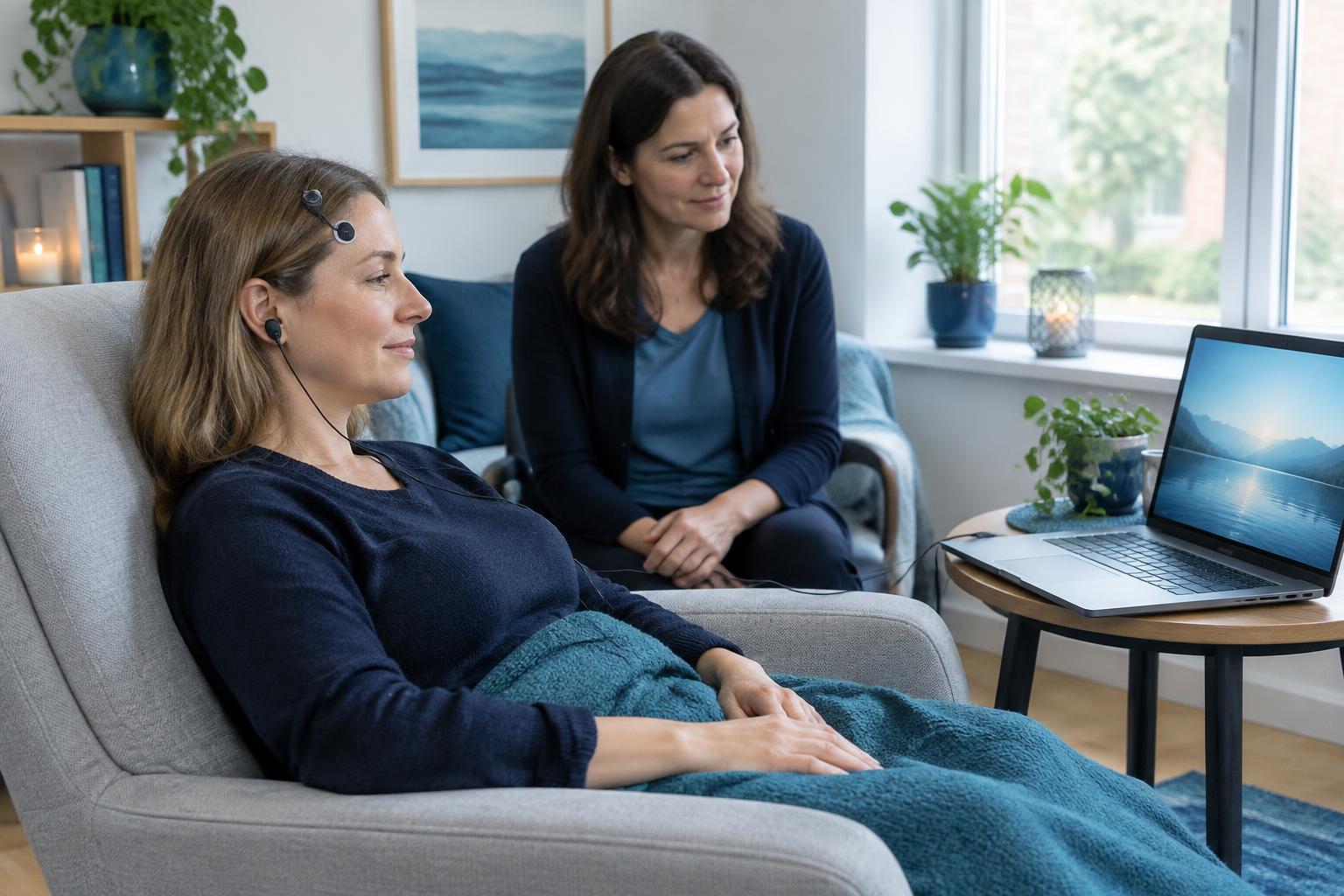
You may sit comfortably while a practitioner fits scalp sensors and checks the recording. Feedback linked to selected patterns of brain activity is provided during training. Specific exercises and software are explained by the practice; no particular package is advertised here. There is usually time to discuss how you found the experience.
Neurofeedback encompasses different methods. Research findings vary by approach, goal and study quality. It is important to ask what evidence supports a proposed programme, how progress will be reviewed and what limitations apply.
It is not appropriate for everyone, and no outcome is guaranteed. Speak to your healthcare professional about medical concerns and do not change prescribed care on the basis of website information.
People explore neurofeedback for different reasons. These are interests for conversation, not established medical indications.
Explore who we help
For people interested in exploring relaxation and a calmer approach to everyday wellbeing.
For individuals curious about brain training and cognitive focus.
For athletes exploring mental preparation, focus and self-regulation.
For people asking about neurofeedback in connection with anxiety. Evidence and suitability need individual discussion.
For families seeking balanced information about neurofeedback and autism, without promises to change or cure autism.
For people enquiring about migraines and brain wellness. Medical assessment remains important.
Neurofeedback is not a replacement for medical care. Suitability should be assessed individually, and no outcome is guaranteed.
New to neurofeedback? It’s natural to have questions. Start here, or get in touch for a conversation.
All frequently asked questionsNeurofeedback is a form of biofeedback that uses information about the brain’s electrical activity, recorded through scalp sensors using electroencephalography (EEG). Selected aspects of that activity are used to provide feedback during training. The aim is to practise responding to feedback, rather than to have electricity or instructions delivered into the brain.
There are different neurofeedback methods and training approaches. Evidence, suitability and possible benefits vary with the method and the goal being explored. An initial discussion should explain the proposed approach, its limitations and how your experience would be reviewed; no particular outcome can be guaranteed.
The process starts with a discussion of your goals, relevant circumstances and whether training may be appropriate. During EEG monitoring, sensors are placed on the scalp to record electrical brain activity using NeuroTrain’s NeuroAmp II.5s, manufactured by BEE Medic. These sensors record signals; they do not send electricity into your brain.
Feedback is provided during training in response to selected patterns of activity. The practice will explain the sensor placement, specific exercises and software before you begin, rather than assuming one setup suits everyone. Afterwards, you can discuss how the session felt, raise any discomfort or concerns and review possible next steps.
NeuroTrain currently owns and uses one confirmed neurofeedback device: the NeuroAmp II.5s, manufactured by BEE Medic. It records EEG activity for feedback during training. The practitioner should explain how this equipment will be used for your proposed sessions.
Optional modules, additional sensors and specific software packages have not been confirmed and are not advertised as available. The supplied product-reference photograph shows two units; it is not a photograph of NeuroTrain’s equipment collection. Session illustrations are also illustrative, not photographs of NeuroTrain’s clients or a confirmed training setup.
No. EEG records electrical activity through scalp sensors. It does not produce the anatomical images associated with an MRI scan, and a neurofeedback session is not a full diagnostic brain scan. Information used for training should not be treated as a diagnosis of a medical or mental health condition.
NeuroTrain does not advertise qEEG brain mapping, ERP diagnostic assessments or clinical diagnostic brain scans. Owning the base NeuroAmp II.5s does not establish access to optional capabilities. If you need investigation of symptoms or a diagnosis, speak with an appropriately qualified healthcare professional.
No single approach is suitable for everyone. Suitability depends on your goals, health circumstances, the proposed method and your ability to participate comfortably. An individual discussion is important before deciding whether to start, particularly if you have a medical or mental health condition, take medication or are receiving other care.
Ask the practitioner about their relevant training, the evidence for your particular goal, possible unwanted effects and alternatives. Where appropriate, involve the healthcare professional responsible for your care. Deciding not to proceed, or to seek further advice first, is a valid outcome of the consultation.
Appointment length can include time for discussion, sensor preparation, training and a review afterwards. The amount of time spent training is therefore not necessarily the same as the total time you will need to allow for the appointment. Duration varies with the approach and individual needs.
NeuroTrain’s appointment durations have not yet been confirmed. Before booking, ask how long the initial consultation and later sessions are expected to take, whether preparation time is included and whether any breaks or adjustments would be appropriate for you.
There is no universal number of sessions, fixed timetable for change or guaranteed outcome. Any proposed schedule should be based on an individual discussion of your goals and circumstances, with an explanation of why that schedule is being suggested. NeuroTrain’s programme details have not yet been confirmed.
Before committing, ask about the suggested frequency, total costs and review points. Agree how your experience will be assessed and what would lead to continuing, changing or stopping training. Completing a particular number of sessions does not in itself establish that a benefit will occur.
The initial conversation is an opportunity to explain what brings you to NeuroTrain, discuss your goals and ask questions without assuming that training is the right next step. Relevant health information and existing care may need to be considered through an appropriate private discussion.
Before you decide to continue, ask for an explanation of the proposed approach, practitioner qualifications, evidence and limitations, possible unwanted effects, appointment arrangements and costs. Please do not send detailed medical histories or sensitive records through the general enquiry form; ask the practice how any necessary information should be shared.
EEG-based neurofeedback records activity rather than sending electricity into the brain. Sensor contact and scalp preparation are generally not painful, although they may feel unfamiliar or uncomfortable. Ask what preparation is involved if you have sensitive skin or concerns about contact materials.
Not everyone experiences training in the same way. Possible unwanted effects and how they would be managed should be discussed before starting. Tell the practitioner if you feel discomfort or notice symptoms during or after a session, rather than assuming you should continue regardless. Seek medical advice for significant or persistent symptoms.
Some neurofeedback approaches are used with children, but this does not mean they are appropriate for every child or goal. Age, individual needs, communication, comfort and the proposed method all matter. NeuroTrain’s accepted age range and safeguarding arrangements have not yet been confirmed.
A parent or guardian should discuss consent, the child’s willingness to participate, relevant practitioner experience and the evidence and limitations before arranging sessions. Where a child is receiving healthcare or educational support, involve the relevant professionals as appropriate. Training should not replace recommended medical care or established support.
No. Neurofeedback is not a replacement for medical assessment, prescribed medication, psychological treatment or other recommended healthcare. Do not stop medication, change a dose or alter an existing care plan because you are considering or attending training.
Discuss the proposed approach with the professional responsible for your care where relevant, including how it might fit alongside existing support. New, worsening or urgent symptoms need appropriate healthcare advice, not a website enquiry or a neurofeedback appointment.
Contact N Dolatshad at NeuroTrain on WhatsApp using 07867 630700, or email info@neurotrain.co.uk, to discuss your goals and appointment availability. The practice is in NW London; the full address and service area are still to be confirmed. Appointment hours depend on availability.
The website enquiry form currently checks details only: it cannot send a message or reserve an appointment. Contact the practice directly and agree the appointment arrangements, suitability and fees before treating a booking as confirmed. Avoid including sensitive medical details in an initial general enquiry.
Neurofeedback uses recorded EEG activity to provide feedback during training. Brain training is a broader term for activities that practise cognitive skills such as attention or memory; it does not always involve EEG. Brain wellness looks at the wider context of wellbeing, including rest, routines and personal goals.
These terms describe different areas of interest, not interchangeable treatments or guaranteed results. Getting better at a particular cognitive task does not necessarily produce improvements in everyday life. The consultation should clarify which approach is being proposed and why it may be relevant to your goals.
Yes. These can be topics for an individual consultation, alongside relaxation, concentration and general wellbeing. A topic appearing on this website does not mean NeuroTrain offers a proven treatment for that condition or can promise a particular result.
Evidence varies by goal and neurofeedback method, so ask what research supports the specific approach being proposed and what its limitations are. NeuroTrain does not promise to cure conditions or change or cure autism. Medical concerns, including anxiety-related symptoms, migraines and persistent sleep difficulties, should also be discussed with an appropriate healthcare professional.
Ask the practice for preparation instructions for your particular appointment, including whether anything is needed for scalp sensor contact. Confirm the address, appointment length, fees and any access requirements before travelling. NeuroTrain’s detailed preparation guidance has not yet been confirmed.
It can help to think about your goals and the questions you want answered, including how progress would be reviewed. Continue prescribed medication and existing care unless your responsible healthcare professional advises otherwise. Ask how to share relevant health information privately rather than sending detailed records through the website enquiry form.
Start by agreeing clear, realistic goals and how they will be reviewed. Your own experience and relevant everyday changes can be discussed alongside any information used during training. Changes in recorded EEG activity alone do not establish a meaningful improvement in daily life or a medical outcome.
Ask when reviews would take place, how other factors such as sleep, routines or concurrent care would be considered, and what would happen if you notice no benefit or feel worse. NeuroTrain’s specific review arrangements need to be agreed individually; there is no guaranteed result or deadline for improvement.
NeuroTrain’s fees, session packages and payment arrangements have not yet been confirmed on this website. Ask the practice for the costs of the initial consultation and any proposed training, including what is included, before agreeing to proceed.
Online payment options are currently inactive placeholders; the website does not take payments or collect card details. Cancellation, rescheduling and refund terms also need to be confirmed with the practice before booking. Do not assume a displayed payment option means that a service has been booked or paid for.
Contact NeuroTrain to find out more about neurofeedback and discuss your individual goals.